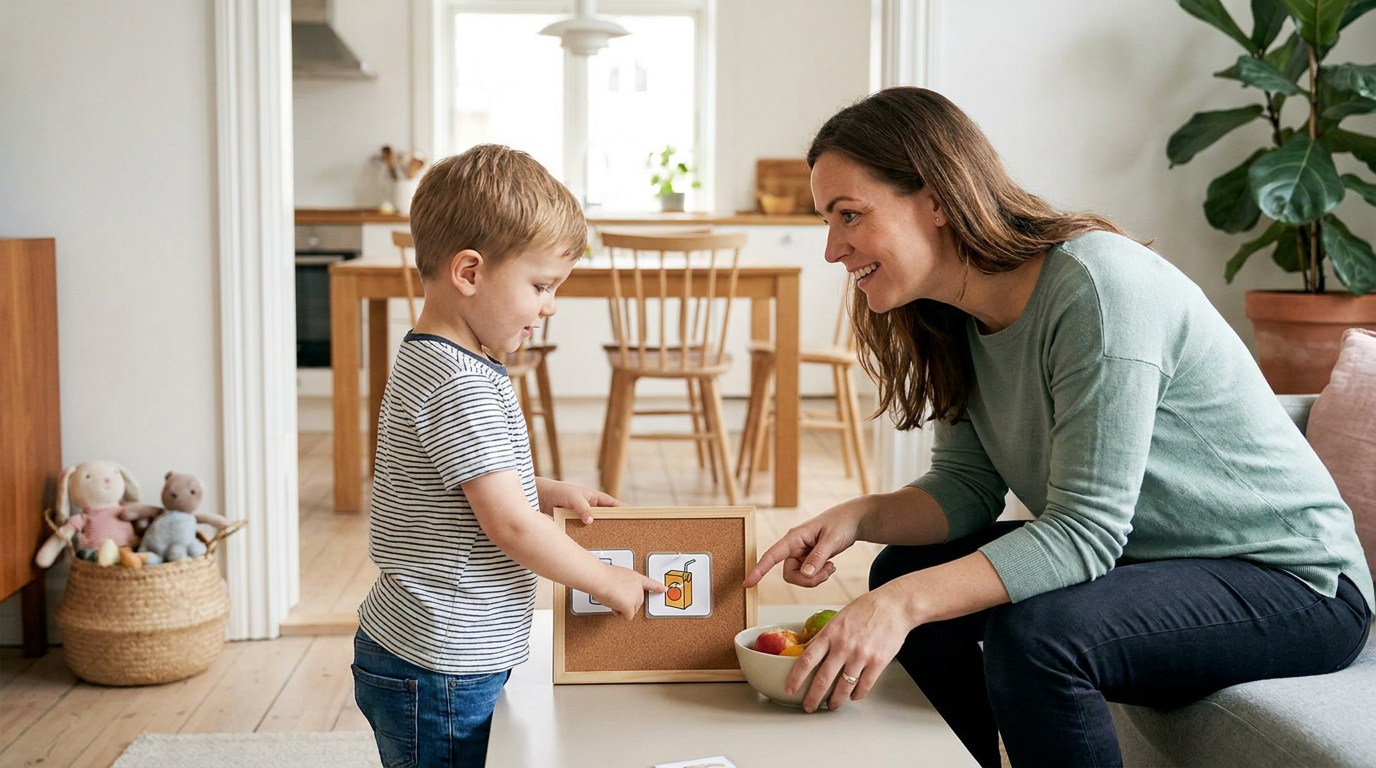
Your child's ABA sessions cover a set number of hours each week, but the rest of the week happens at home. Breakfast, bath time, the drive to Grandma's in Plymouth: these are the moments where new skills either take hold or quietly fade.
That's why parent training is built into how we deliver ABA across Massachusetts at Rising Above ABA. Below, we explain what caregiver training is, why it matters, which strategies you can use at home and what a coaching session actually looks like.
What Is Caregiver and Parent Training in ABA Therapy?
Applied behavior analysis (ABA) is a science-based approach that teaches skills by looking at what happens before and after a behavior. Caregiver training is the part of ABA where you become the learner. In these sessions, a Board Certified Behavior Analyst (BCBA) teaches you the strategies your child's therapists use. The goal is simple: you learn to apply them confidently in daily life.
That's different from direct therapy, where a registered behavior technician (RBT) works one-on-one with your child under BCBA supervision. In caregiver coaching, the BCBA watches you, gives you feedback, and helps you adapt each strategy to your home. Our autism specialist team builds parent and caregiver training into each individualized treatment plan from the start.
Many Massachusetts plans cover these sessions, which are sometimes billed as family guidance or parent training. Coverage varies by plan, though, so we confirm the details with you during intake. And if you're new to ABA terms, our overview of our treatment process walks through each stage in plain language.
Why Does Parent Involvement Matter for Progress?
Parent-implemented strategies are a recognized part of evidence-based autism care. The CDC's overview of treatment and intervention for autism lists behavioral approaches such as ABA among the established options. Those approaches work best when the people around a child respond in consistent, predictable ways.
The key idea here is generalization. In ABA, generalization means a child can use a skill with different people, in different places, and with different materials. Say your daughter asks for "help" with her therapist at our Norwell center. The skill isn't fully learned until she can ask you for help at home, too.
Maintenance, the ability to keep using a skill weeks and months after formal teaching ends, matters just as much. Home skill generalization in ABA depends on practice across settings. You're with your child in far more of those settings than any therapist will be. So when you use the same language and the same reinforcement, skills have a better chance of lasting.
Which ABA Strategies Can Parents Use at Home?
The strategies below are common building blocks in ABA programs. Your BCBA will tell you which ones fit your child's goals and show you how to use them. Treat this as an introduction, not a substitute for coaching.
Positive reinforcement
Reinforcement is anything that follows a behavior and makes that behavior more likely to happen again. Deliver it right away, within a second or two, and be specific about what you liked. "You put your cup in the sink, nice job!" teaches far more than a general "good boy."
First-then statements
A first-then statement pairs a less preferred task with something your child enjoys. "First shoes, then iPad" is short, clear, and easy to follow. Keep the promise every time, because the routine only works if your child learns to trust it.
Prompting and fading
A prompt is any help you give so your child can succeed, like pointing, a verbal cue, or guiding a hand. Fading means giving a little less help each time. Say your daughter is learning to wash her hands: you might guide her wrists on Monday, then simply point to the soap by Friday.
Visual schedules and supports
A visual schedule uses pictures or words to show what's coming next in the day. For many children with autism, seeing the sequence reduces uncertainty around transitions. A strip of photos on the fridge showing "breakfast, teeth, coat, bus" can make mornings noticeably calmer.
Offering choices
Choices give your child a sense of control while the task itself stays the same. "Do you want the red cup or the blue cup?" still ends with a drink at the table. Two options usually work better than five, especially for younger children.
Modeling
Modeling means showing the skill you want to see. If you want your son to say "my turn" during a board game, say it yourself on your own turn, clearly and with a smile. Children often copy what they see before they can follow a spoken instruction.
One important boundary applies here. Strategies for challenging behavior, including planned ignoring and extinction procedures, should only be used under a BCBA's direct guidance. Those approaches depend on a functional assessment and careful planning, and using them without support can make behavior harder to manage.
How Do You Reinforce Skills Between BCBA Visits?
Start small. Pick one or two target skills each week with your BCBA, such as requesting a snack with words or putting on a jacket independently. Trying to practice ten goals at once tends to dilute all of them.
Next, keep simple data. Tally marks on a sticky note by the fridge work well, with one column for independent tries and one for tries that needed help. Honestly, you don't need a spreadsheet (unless you love spreadsheets, in which case go for it). Bring the notes to your next session so the team can see how things look at home.
Finally, get everyone using the same words. If you say "hands down" but your babysitter says "stop touching that," your child is learning two different cues for one behavior. A short list on the counter with the key phrases helps grandparents, sitters, and older siblings stay on the same page.
What Does a Caregiver Training Session Look Like?
Most caregiver coaching follows a method called behavioral skills training, or BST. It has four parts: instruction, modeling, rehearsal, and feedback. The BCBA explains the strategy, shows it, has you practice it, and then tells you what went well and what to adjust.
Here's how that might play out with a first-then bedtime routine. The BCBA explains why "first pajamas, then story" works and models it with your child while you watch. Then you try it yourself, and the BCBA offers specific feedback, like delivering praise a little faster.
Sessions might happen in your living room in Quincy or at our Norwell center. The setting matters less than the practice, because rehearsing with real coaching is where confidence builds. Expect to repeat a strategy across several sessions before it feels natural.
What If a Strategy Isn't Working at Home?
Setbacks are normal, and they're useful information. A strategy that runs smoothly in a session can look very different at 5:30 on a Tuesday evening with dinner on the stove. That doesn't mean you're doing it wrong.
Bring your tallies and notes to your BCBA, along with a quick description of when things fell apart. With that data, the BCBA can adjust the plan, simplify a step, or swap in a different approach. You know your child better than anyone, and the plan should adapt to your family rather than the other way around.
It also helps to flag problems early instead of waiting for a formal progress review. A quick message to your BCBA after two rough days can save weeks of frustration for you and your child. But try to note what happened right before the hard moment, since that detail often points straight to the fix.
Frequently Asked Questions
Is parent training required in ABA therapy?
At Rising Above ABA, parent and caregiver training is a core part of every treatment plan. Some insurance plans also expect caregiver participation as part of authorizing ABA services. Your BCBA will talk through what participation looks like for your family during intake.
How often do caregiver training sessions happen?
Frequency depends on your child's plan, your goals, and your insurance authorization. Many families meet with their BCBA for caregiver training on a regular weekly or biweekly schedule. Your BCBA will recommend a rhythm and adjust it as your skills and your child's needs change.
Can grandparents or nannies join caregiver training?
Yes, and we encourage it when it fits your family. Anyone who regularly cares for your child benefits from learning the same strategies and language. Consistency across caregivers is one of the most practical ways to support home skill generalization in ABA.
Does insurance cover parent training for ABA in Massachusetts?
Many plans do, including some MassHealth and commercial plans, but coverage varies by plan. We accept most commercial insurance, including Aetna, Blue Cross Blue Shield, Cigna, and UnitedHealthcare. Our intake team will verify your benefits before services begin, so you'll know what's covered.

Give us a call at 888.572.7473 or reach out to our team online to get started—we're looking forward to partnering with your family.