Your child's first in-home applied behavior analysis (ABA) session is on the calendar. You're probably wondering what the house should look like when the therapist knocks. Good news: preparing your home for ABA therapy takes far less than most parents expect, and no dedicated therapy room is required. What helps most is a little planning around space, routines and the things your child already loves.
At Rising Above ABA, our ABA therapy programs are led by a BCBA (Board Certified Behavior Analyst). That's the clinician who designs and oversees your child's individualized treatment plan. Below are the in home ABA therapy tips for parents we share most often across the South Shore, Greater Boston, and the North Shore.
Why Does Preparing Your Home for ABA Therapy Matter?
Children tend to learn best when they know what to expect. A predictable space, used in roughly the same way each time, helps your child recognize that this is where they practice with their therapist. Fewer competing sights and sounds also mean more of your child's attention goes to the learning itself. That matters most in the early weeks, when the therapist is still figuring out what grabs and holds your child's interest.
Home has another advantage that a clinic can't fully copy. It's where your child will use new skills, from asking for juice at the counter to washing hands at the sink. Clinicians call this generalization, meaning a skill carries over to new people, places, and situations. Teaching in the real setting gives generalization a head start, which is one reason families choose in-home ABA in the first place.
Keep in mind that the setup supports the treatment plan rather than replacing it. Your BCBA will look at the space you have during the first visits and suggest small changes that fit your child. So treat the ideas below as a flexible starting point, not a checklist you need to finish before day one.
How Do You Choose the Right Space for Sessions?
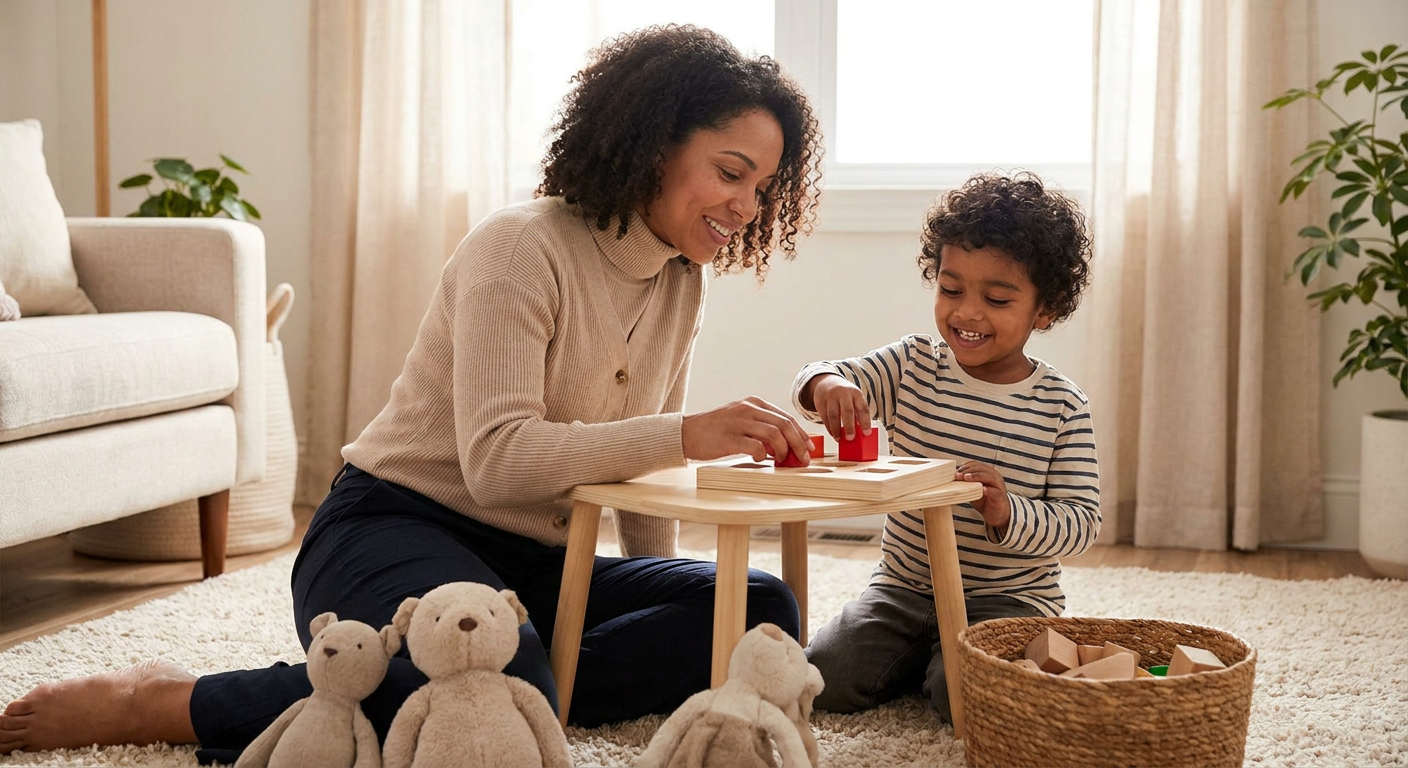
Setting up a home ABA workspace is mostly about picking a consistent spot and keeping it calm. Look for a small table and two chairs, or a clear patch of floor if your child is younger. Good natural light helps, and so does distance from the TV, the gaming console, and the busiest walkway in the house. Use the same spot for most table-based sessions so your child starts to connect it with learning.
For many families, the corner of the dining room works fine. A cleared kitchen table or the quiet end of a living room can do the job, too. What matters is that the space is predictable, and that toys and screens aren't competing for your child's attention from a few feet away.
Don't be surprised when sessions leave the table, though. Much of in-home ABA happens wherever routines happen: the kitchen for snack requests, the bathroom for handwashing, the backyard for turn-taking on the swing. Your therapist may practice putting on shoes at the front door before a trip to the car. That flexibility is the whole point, because these are the places where new skills need to work.
What Materials Should You Have Ready?
Start with your child's favorites, since these become reinforcers (anything that follows a behavior and makes it more likely to happen again). Think toys, short videos, snacks, or a tickle game. The oddly specific favorites (the one blue truck, a certain brand of pretzels) often matter most. Your therapist will test which items work, but a written list of favorites saves time.
It also helps to have a bin or high shelf where those top items can live between sessions. This sounds strict, but there's a practical reason behind it. If your child has the tablet all afternoon, it loses its pull when the therapist offers it after a tricky new skill. Your BCBA will talk through how to handle this so it feels fair to your child and manageable for you.
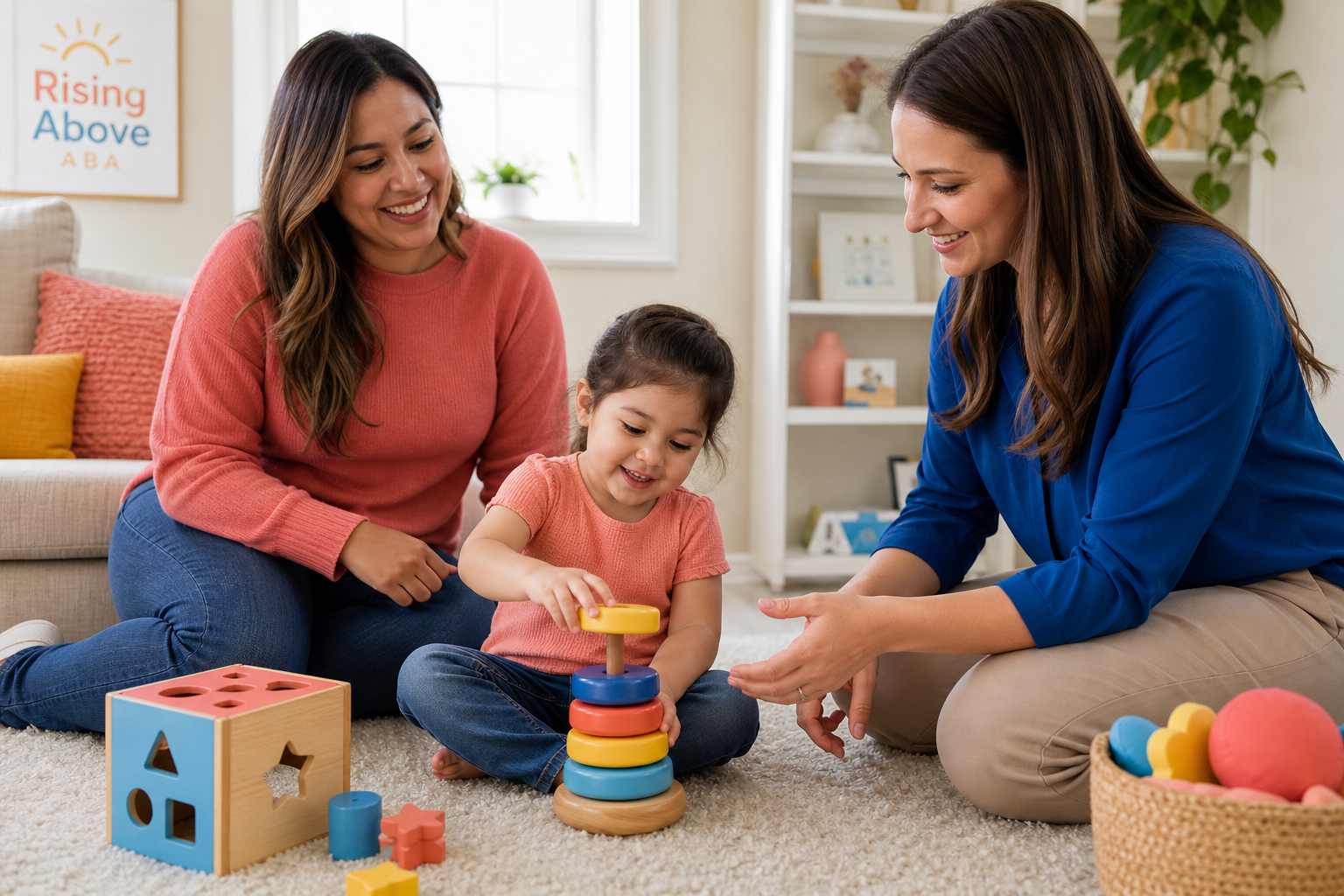
Clear a small spot for the therapist's materials as well, such as an open shelf, a basket or a corner of the counter. Therapists usually bring their own teaching materials, including picture cards, sorting tasks, and a tablet for recording data. Ask your intake team what your therapist will bring. In most cases, no shopping trip is required.
How Do You Manage Distractions, Siblings, and Pets?
Therapists working in Massachusetts homes are used to barking dogs and older siblings arriving off the school bus. Still, a few small moves help sessions run smoothly. Turn off the TV in the session area and silence any devices that ping (yours included, if you can manage it). Close a door or use a baby gate if a curious toddler or pet tends to wander in.
Siblings deserve their own plan. A brother or sister who feels left out may hover, interrupt, or ask to play with the reinforcers, which is completely understandable. Try scheduling sessions around nap time or homework. Or set up a special activity, like a library book or art kit, that only comes out during visits.
Siblings can also become part of the work, and that can be a lovely thing for both kids. Once your child is comfortable, your BCBA may plan short practice with a sibling for skills like sharing or turn-taking. Practicing with a real playmate is hard to recreate any other way, so ask your BCBA how to set it up.
As for pets, settle them before the therapist arrives, especially if your dog gets excited at the door. A walk beforehand or a crate in another room often does the trick. And let the intake team know about any pets ahead of time, since some therapists have allergies.
What Should the First Week of In-Home ABA Look Like?
The first week often looks more like play than therapy, and that's by design. Therapists start with pairing, which means building rapport so your child links the therapist with fun, attention, and favorite things. Expect plenty of bubbles, games, and following your child's lead, with very few demands. Children usually engage more readily once they trust the person teaching them.
While they play, therapists are also observing. They watch how your child communicates, what holds their interest, and how routines like snack time or switching activities currently go. Light demands, such as "come sit" or "give me the ball," get added gradually. Data collection starts right away, too, because those early notes give your BCBA a baseline (a starting point) for shaping goals.
Your BCBA will usually be part of these early visits, observing sessions, answering your questions, and checking that the plan fits what they see. Keep your expectations honest during this stretch. Progress in week one is mostly measured in trust and comfort, and new skills follow at a pace guided by your child's data.
If your family hasn't begun services yet, you can start the intake process with our team whenever you're ready. And if you'd like the steps laid out in order, our guide explains what to expect after you contact a provider. Knowing what's coming can make the early paperwork feel far less daunting.
How Can Parents Prepare Themselves and Their Child?
A little preparation helps your child meet the therapist with curiosity instead of worry. If your team can share a photo of the therapist ahead of time, show it a few times that week. A social story (a simple illustrated story about what will happen) can explain that a new helper is coming to play. Keep the language upbeat and concrete: who's coming, when, and what you'll do together.
Then prepare yourself by writing down your child's likes, sensory sensitivities, known triggers, and daily routines, especially the times things tend to fall apart. Bring questions for your BCBA, such as how parent and caregiver training will work and how progress will be shared with you. Behavioral approaches like ABA are among the options the CDC lists for autism treatment. Your knowledge of your child is a big part of what makes them work.
You're the expert on your child, and the BCBA is the expert on the science. Sessions go best when those two kinds of knowledge meet early and often. If you'd like some background reading before the first visit, the American Academy of Pediatrics keeps a parent-friendly autism section on HealthyChildren.org.
Frequently Asked Questions
Do I need a separate room for in-home ABA?
No, you don't need a separate room. Most families use a corner of the dining room, kitchen or living room, with a small table or open floor space. Consistency and low distraction matter far more than square footage, and your BCBA can suggest small adjustments after seeing your home.
Should I be present during sessions?
Policies vary by provider and program, so ask our intake team how caregiver presence works for your child's sessions. In general, in-home ABA providers expect a parent or caregiver to be home during visits. You won't need to sit beside your child for every minute. Joining parts of sessions and parent and caregiver training, though, helps you use the same strategies between visits.
What if my child refuses to work with the therapist at first?
That's common, and it's exactly why the first weeks focus on pairing. Therapists keep demands low and let your child approach at their own pace, often by joining in with favorite activities. If hesitation continues, your BCBA reviews the session data and adjusts the approach. Try not to push your child toward the therapist, since pressure can slow trust down.

Give us a call at 888.572.7473 or reach out to our team online to get started—we're looking forward to partnering with your family.